
Promote Worker Participation
To have successful safety programs, workers must believe their input is welcome, their voices will be heard, and that participation will only result in positive consequences.
Encourage workers to be involved: Encouraging involvement sends the message management values their input into safety and health decisions.
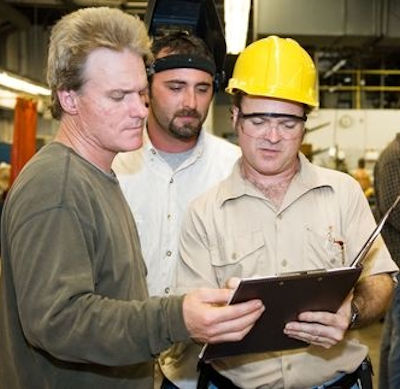
- Give workers the time and resources to participate in the program.
- Give positive recognition to those who participate in the program.
- Have an open-door policy that invites workers to talk to managers about safety and health.
- Make sure workers know participation will never result in any form of retaliation.
- Give workers access to safety data sheets, injury and illness data, inspection results and other reports.
- Include workers at every step of program design and implementation.
Encourage workers to report safety and health concerns: Employers can address issues before someone gets hurt or becomes ill by encouraging reporting and following up promptly on all reports.
- Establish a process for workers to promptly report injuries, illnesses, close calls/near misses, hazards, and other safety and health concerns.
- Respond to reports promptly.
- Empower all workers to initiate or request the suspension or shut down of any work activity or operation they believe to be unsafe.
- Involve workers in finding solutions to reported issues.
Remove barriers to participation: One of the most common barriers to employee involvement in workplace safety is the fear of retaliation or negative consequences for reporting hazards, injuries, near misses, or unsafe conditions.
Below are barriers to successful participation in safety:
- Lack of management support or visible commitment to workplace safety
- Fear of retaliation or discipline for reporting hazards or incidents
- Poor communication between employees and supervisors
- Limited safety training or lack of hazard recognition training
- Employees believing their concerns will not result in corrective action
- Insufficient time for safety meetings, inspections, or participation activities
- Language barriers or low literacy levels affecting understanding of safety information
- Lack of employee involvement in safety planning or decision-making
- Production demands that prioritize speed over safety
- Insufficient staffing, equipment, or resources to support safe work practices
- Negative workplace culture or resistance to safety improvements
- Inconsistent enforcement of safety rules and procedures
- Limited trust between employees and management
- Lack of recognition for employee participation in safety activities
- Complacency caused by routine tasks or a history of few reported incidents
Knowledge Check Choose the best answer for the question.
2-2. What is one of the most common barriers to effective employee participation in safety and health?
You forgot to answer the question!