
Portable Ladders
Portable ladders help you access a work area or provide support while you work. Portable ladders make accessing a work area easy, but they can increase the potential for falls if not used properly.
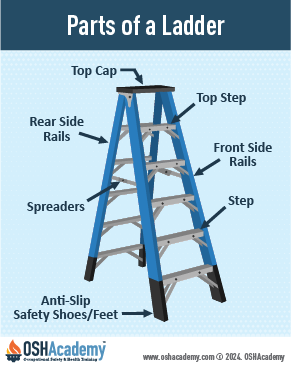
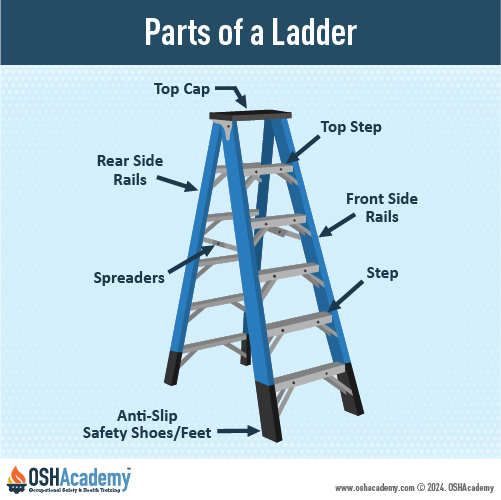
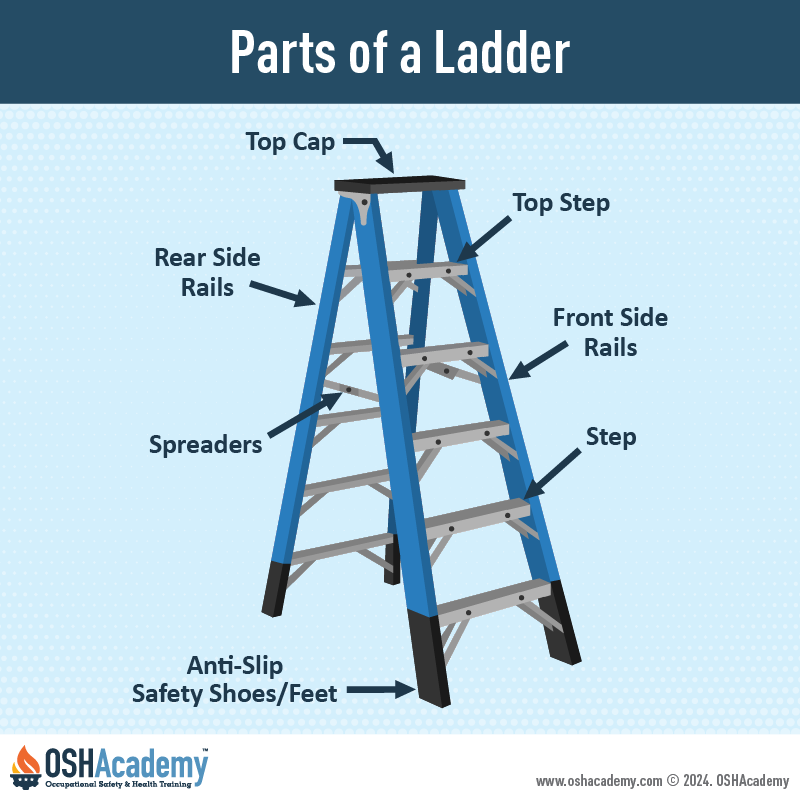
Portable ladders are versatile, economical, and easy to use. However, workers sometimes use them without thinking about safety. The Bureau of Labor and Statistics reports that 20 percent of fatal falls at work occur from heights less than 15 feet (4.5 m), and 50 percent of fatal falls are from a height less than 35 feet (10.6 m).
Ladder Selection
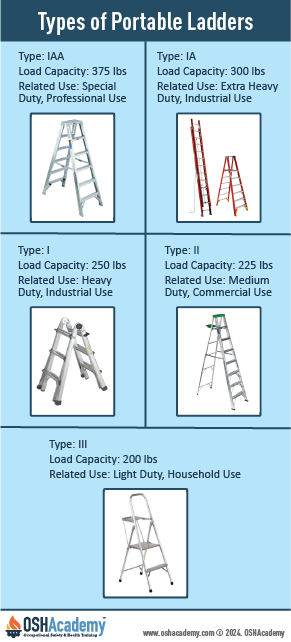
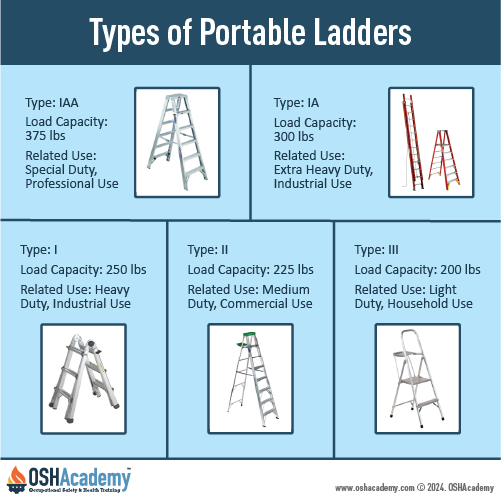
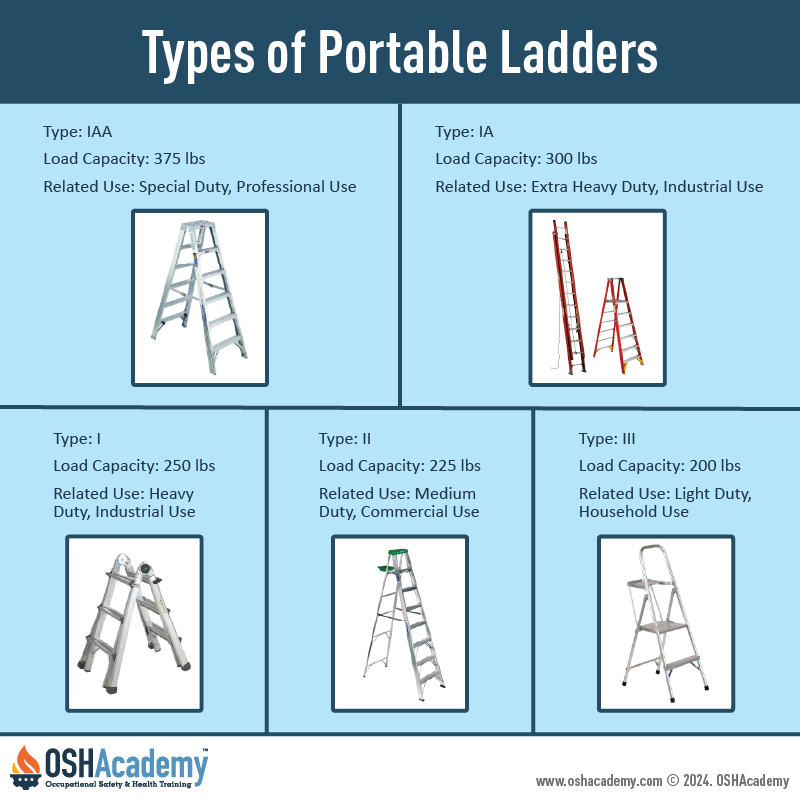
Be sure the ladder being used has the proper duty rating to carry the combined weight of the user and the material being installed. A ladder's duty rating tells you its maximum weight capacity.
There are five type classifications with associated duty ratings:
- Type IAA - These are special duty ladders. Type IAA ladders are for extra-heavy-duty professional use only.
- Type IA - These ladders have a duty rating of 300 pounds. Type IA ladders are recommended for extra-heavy-duty industrial use.
- Type I - These ladders have a duty rating of 250 pounds. Type I ladders are manufactured for heavy-duty use.
- Type II - These ladders have a duty rating of 225 pounds. Type II ladders are approved for medium-duty use.
- Type III - These ladders have a duty rating of 200 pounds. Type III ladders are rated for light-duty use.
Here are some OSHA requirements for using portable ladders:
- The minimum clear distance between side rails for all portable ladders must be 11.5 inches (29 cm).
- The rungs and steps of portable metal ladders must be corrugated, knurled, dimpled, coated with skid-resistant material, or treated to minimize slipping.
- Non-self-supporting and self-supporting portable ladders must support at least four times the maximum intended load; extra heavy-duty type 1A metal or plastic ladders must sustain 3.3 times the maximum intended load.
- When portable ladders are used for access to an upper landing surface, the side rails must extend at least 3 feet (0.9 m) above the upper landing surface. When such an extension is not possible, the ladder must be secured and a grasping device such as a grab rail must be provided to assist workers in mounting and dismounting the ladder.
- A ladder extension must not deflect under a load that would cause the ladder to slip off its supports.
During an Oregon OSHA inspection at a residential construction site performing two-story framing work, inspectors observed multiple portable ladder hazards that increased the likelihood of a fall. One ladder being used to access an upper landing did not have side rails extending at least 3 feet above the landing. The ladder was not secured, and workers were forced to step on/off the ladder without a stable handhold or grab device to safely mount and dismount.
Inspectors also documented poor ladder condition and oversight: a defective ladder with a broken anti-slip device remained in service instead of being removed or tagged out. These failures were part of a broader pattern of unsafe practices on site, alongside other serious hazards identified during the inspection.
No injuries or fatalities were reported at the time. Oregon OSHA still treated the conditions as serious because ladder-related falls are a common cause of fatal incidents, often from relatively low heights.
What went wrong:
- Ladders used for upper-landing access did not extend 3 feet above the landing and were not secured when extension was not possible.
- A defective ladder stayed in service rather than being removed from use or clearly tagged out.
- Site leadership failed to enforce basic ladder selection, inspection, and safe-use requirements.
How to prevent a repeat:
- Use ladders with the correct duty rating for the worker plus tools/materials (do not guess).
- For upper landings, ensure side rails extend at least 3 feet above the landing. If not possible, secure the ladder and provide a grab rail/handhold.
- Inspect ladders daily; remove damaged ladders from service immediately and tag them out.
- Use ladders with slip-resistant rungs/steps and maintain stable footing and placement.
Bottom line: ladder work is routine — and that’s exactly why it gets people hurt. Treat ladder selection, setup, and condition checks as mandatory, not optional.
Knowledge Check Choose the best answer for the question.
1-3. How far must side rails extend above the upper landing when portable ladders are used for access to an upper landing surface?
You forgot to answer the question!