
What is a Hazard?
In the previous section, we listed several different types of hazards. So why are we asking what a hazard is? One of the goals of this training is to give you the tools to help identify hazards in the workplace. In order to do this, it's important to understand what a hazard is!
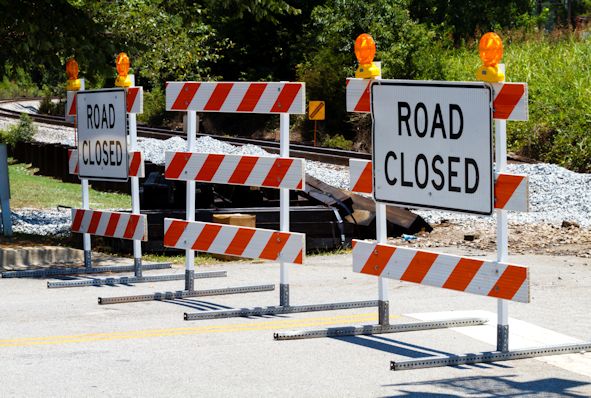
OSHA usually defines a hazard as "a danger which threatens physical harm to employees." Expanding on that basic definition, we can think of a hazard as an "unsafe workplace condition or practice (danger) that could cause an injury or illnesses (harm) to the employee."
A hazard may be an object (tools, equipment, machinery, materials) or a person (when distracted, mentally/physically incapable). It's important to know a hazard is only one part of the "accident formula" described. It takes a hazard and exposure before an accident can occur.
The first step in controlling workplace hazards is to first identify them. We want to determine what hazards are present. You want to know what a hazard looks like, what kind of accidents might it cause, and how severe the resulting injuries might be.
One way to identify hazards is to perform a safety inspection. Safety inspections should do more than simply identify hazardous conditions. They should provide useful data for the purpose of effective analysis and evaluation of the safety management system. It sounds complicated, but it's really not.
There are five basic methods you can use to identify workplace hazards before an accident occurs:
- informal observations and formal observation programs
- comprehensive company-wide surveys
- individual interviews
- walk-around inspections
- documentation review
In December 2025, an Oregon OSHA inspection at a manufacturing facility identified multiple serious workplace safety hazards involving material storage systems and machinery. Inspectors found that industrial storage racks used to hold heavy raw materials were improperly installed and poorly maintained. Several baseplates were not anchored to the floor, some were damaged, and others were installed incorrectly. Despite these conditions, heavy materials were stored at height, and employees accessed them manually and with forklifts.
These conditions exposed workers to significant struck-by and crushing hazards, as unsecured materials could shift or fall and seriously injure employees below. In addition to the storage hazards, inspectors also identified a belt sander with unguarded moving parts, creating a clear risk of hand or finger injuries. No injuries or fatalities were reported at the time of the inspection. However, Oregon OSHA determined that the hazards presented a realistic and foreseeable risk of serious injury or death if left uncorrected.
The investigation concluded that the employer was aware of the unsafe storage rack conditions and failed to take corrective action. As a result, Oregon OSHA cited the employer for a willful violation related to the storage system hazards, meaning the company knowingly allowed a dangerous condition to persist. A second violation was issued for the unguarded machine. The employer was ordered to correct the hazards and was assessed a total fine of $28,478.
This case highlights the importance of hazard identification, reporting, and follow-through in preventing serious workplace incidents:
- Unsafe storage systems and structural deficiencies must be reported, evaluated, and corrected immediately, especially when heavy materials are involved.
- Hazards that do not cause immediate injury should not be minimized or ignored; near-miss conditions often precede serious incidents.
- Employees and supervisors must be trained to recognize struck-by, crushing, and machine-entanglement hazards and understand when equipment is unsafe to use.
- Known hazards must be documented and escalated, and corrective actions must be tracked to completion.
- Proactive inspections and early reporting create a feedback loop that allows hazards to be addressed before enforcement actions — or injuries — occur.
Consistent reporting and prompt corrective action are essential to maintaining a safe workplace and preventing known hazards from escalating into serious injuries, fatalities, or regulatory penalties.
You may not be the person conducting the safety inspection in your workplace, but if you understand what it is, you might be able to provide valuable information as a part of the process.
Knowledge Check Choose the best answer for the question.
2-2. What is the first step in controlling workplace hazards?
You forgot to answer the question!